The Three-Week Wardrobe: A Rotation Built Around Your Actual Calendar
Build a flexible three-week clothing rotation from what you already own by matching outfits to your plans, local weather and laundry rhythm.
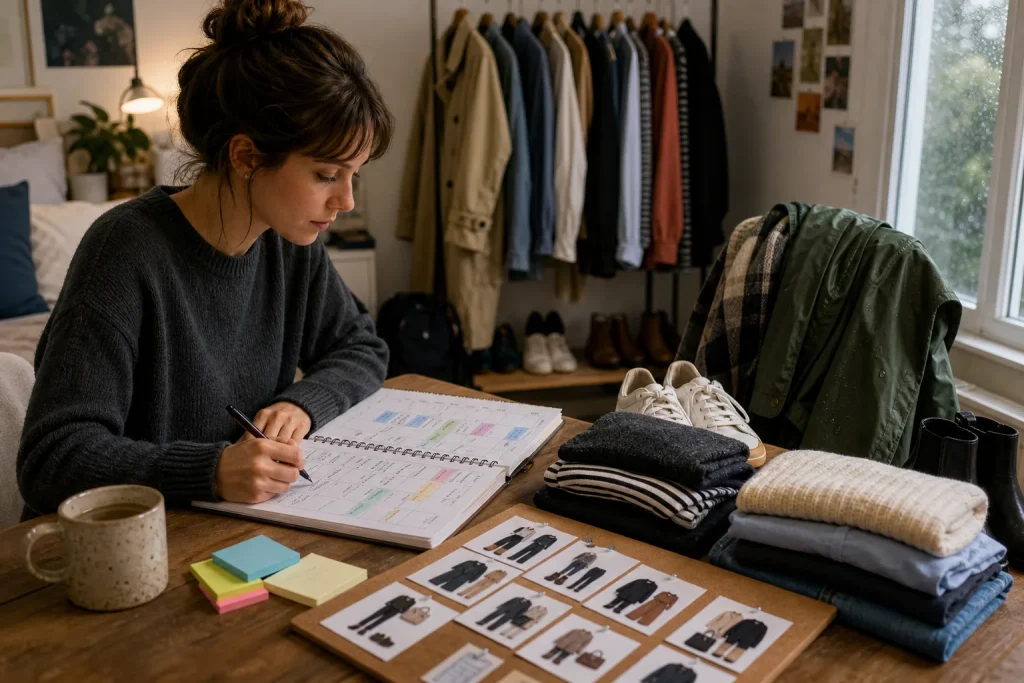
On Monday, Maya opens her wardrobe and sees plenty of clothes, but nothing feels ready for the week: a damp coat hangs over a chair, the trousers she planned to wear are in the wash, and Thursday’s evening plans need something smarter than her usual clothes. She does not need a new capsule wardrobe. She needs a rotation that reflects the life she already has.
Imagine Maya is a clearly hypothetical reader with a three-week work rota, a mix of office and home days, a regular walk, and laundry usually done at the weekend. Her weather is changeable, and she wants to use existing clothes rather than set a rigid daily uniform. By mapping her calendar first, she can choose a manageable pool of garments, keep useful alternatives nearby and make laundry part of the plan.
What does your calendar actually ask you to wear?
Maya starts with the calendar, not the wardrobe. She writes down the next three weeks of commitments and groups them by what clothes need to do. A home-working day might call for comfortable layers that still look presentable on a video call. An office day may need a shirt or jumper that works with smarter trousers. Her regular walk calls for an outer layer and shoes she can move in. Thursday’s dinner needs a slightly dressier option, but not a separate outfit for every possible change in mood.
This is not a request to log every hour. The useful detail is the activity: commuting, sitting at a desk, walking, meeting people, or spending the evening out. Maya marks any event with a specific dress code and leaves ordinary days open. She also notes when she expects to be away from home, since that affects whether she can change before going out.
Then she looks for patterns. In her hypothetical schedule, office days cluster early in the week, home days are scattered, and a long walk appears most weekends. She needs several work-ready combinations, comfortable clothes for home, and an outer layer that can handle a wet walk. She does not need three separate wardrobes for three different kinds of day.
A calendar helps prevent two common traps. One is planning only for an ideal week, as if every day were predictable. The other is packing the rotation with special-occasion clothes that barely get worn. If a particular event is genuinely unusual, Maya can set aside a suitable outfit without letting it dictate the everyday selection.
How should you read the weather without guessing too far ahead?
Maya checks the local forecast for the first few days and the general seasonal pattern for the rest. She does not assign a precise outfit to every date three weeks in advance. Weather forecasts become less useful further out, and a sudden cold snap or warm spell can make a tightly scheduled rotation frustrating.
Instead, she chooses layers that can respond to change. A lightweight knit can sit over a shirt; a raincoat can go over either; a warmer jumper can stand in for the lighter one when the temperature drops. She keeps a scarf available if it suits her usual conditions. The point is not to carry every possible layer, but to select a few pieces that work together and can be adjusted.
She also considers where she will be. A chilly commute followed by a heated office calls for layers that are easy to remove. A day spent outdoors asks more of a coat than a short walk from a car park. Maya’s shoes matter too: a pair that is comfortable in dry weather may not be sensible on a wet route. She chooses footwear around the activities she has listed, not just around the look of an outfit.
Say Maya has pencilled in a light jacket for a walk in the second week, but the nearer forecast points to rain. She can swap in her waterproof coat and keep the same jumper and trousers. The observable result is a workable outfit for the changed conditions, without rebuilding the whole rotation or treating the original plan as a failure.
Which existing pieces earn a place in the rotation?
Now Maya checks what is clean, comfortable and ready to wear. She pulls together clothing she already reaches for: a couple of shirts, two pairs of trousers, a skirt, several tops, a cardigan, a warmer jumper, and her coats. Those are examples from her imagined wardrobe, not a recommended count. Someone with a uniform, a manual job or a different climate will need a different mix.
She checks each candidate in ordinary terms. Does it suit an activity on the calendar? Can she move comfortably in it? Is it clean and in wearable condition? Does it combine with more than one other item? A piece need not be versatile in every direction. A smart blouse that works for an office meeting and an evening meal may still be useful even if she would not wear it for a walk.
Maya makes a small set of combinations rather than a stack of supposedly interchangeable basics. She pairs her blue shirt with dark trousers for the office, then with the skirt for dinner. Her cardigan works over the shirt on a cool commute and over a simple top at home. Her walking trousers are comfortable outdoors but do not need to be forced into a dressier look.
She sets aside clothes that are awaiting a repair, need special laundering she cannot manage before the next wear, or do not fit comfortably at the moment. They are not bad clothes; they simply are not dependable choices for this rotation. If something needs attention, a note on her phone can remind her to mend a button or check the care label later. The rotation should be built from items she can actually wear, not from an imaginary future version of the wardrobe.
How much clothing belongs in a three-week rotation?
There is no universal number. The right amount depends on how often clothes are worn before washing, whether work requires a fresh outfit, the weather, and how often laundry gets done. Maya thinks in terms of outfits and laundry capacity rather than aiming for a prescribed total.
She gives herself enough clean tops and everyday pieces to reach the next laundry session without needing to wear anything that feels stale or uncomfortable. She includes a backup option for a spill or a change in plans, but does not add a duplicate for every garment. If a piece can be worn again comfortably and suits the activity, it may return to the rotation after airing. Underwear, socks and anything that needs washing after use follow her usual clean-clothes routine; she does not stretch those items to make the wardrobe plan work.
Next, she marks the garments that can do double duty. Her cardigan, for instance, can serve at home and in the office. Her raincoat covers a walk and the commute. A smarter pair of shoes can work for dinner and a meeting if the route is suitable. These shared roles help the rotation stay compact without making every outfit look the same.
She keeps a small reserve outside the main selection: perhaps a clean top for an unexpected spill, a warmer layer, or a dressier item for an invitation that appears. It need not be a second wardrobe. The reserve is a buffer, not a reason to keep every possible option at hand.
How can laundry rhythm shape the plan?
Maya’s usual laundry day is the weekend, but she knows that it sometimes slips. She plans around that real habit rather than an idealised schedule. Before choosing the rotation, she checks how much of it can be washed together and whether any garment needs a gentler cycle, hand-washing or drying time. The garment’s care label is the sensible place to start when she is unsure.
She separates clothes that need different care and avoids assuming that everything will be clean by the next morning. A shirt that needs air-drying may not be ready if it goes into the wash late at night. If the laundry basket is already full, she chooses another clean item rather than making a plan that depends on rushing a load.
In her hypothetical situation, Maya places a reminder in her phone for the evening before laundry day. It asks her to check the basket, wash what the next few days require, and put clean items away where she can see them. The reminder does not promise that every garment will be ready. Its practical result is that she can spot a gap early and choose a substitute while there is still time.
If someone else shares the washing machine, or the household has limited drying space, that matters too. The plan should fit the actual laundry setup. A smaller rotation that includes easy-to-care-for pieces may suit one person; another may prefer extra work tops because washing is less frequent. Neither arrangement is automatically better. The clothes need to match the routine they live in.
What should you do when the plan stops fitting?
A three-week rotation is a working arrangement, not a promise to wear each item in sequence. Maya keeps the main pieces together, but leaves room to swap according to the forecast, an invitation or how she feels. She might use a notes app, a paper list on the wardrobe door, or a few outfit photographs on her phone. The tool matters less than being able to see what is clean and available.
She makes a brief check at the end of each week. Which clothes were worn? Which stayed untouched because the weather shifted or the activity did not happen? Was laundry delayed? Did one outfit feel awkward during the commute? These are practical clues, not a scorecard. If she repeatedly avoids a piece, she can replace it with something she likes wearing rather than forcing it into the schedule.
Imagine Maya’s dinner moves from Thursday to Saturday, and the weekend forecast turns colder. She keeps the same trousers and blouse for dinner, adds the warmer jumper for the walk there, and leaves the raincoat by the door. Her office clothes remain available for Monday, and she does not need to buy a special outfit for a change of date. The useful lesson is that a rotation works best when it supports combinations, not fixed pairings.
At the end of the three weeks, Maya can refresh the selection for the next stretch. She returns pieces that no longer suit the weather, brings in others that match the upcoming calendar, and checks whether anything needs washing or repair. The rotation is allowed to change with her plans and local conditions.
When you try this, begin with the next few commitments and the laundry routine you genuinely keep. Choose clothes that are clean, comfortable and suited to those days, then leave one or two practical alternatives within reach. A wardrobe plan is useful when it makes tomorrow’s choice easier; it should never make an ordinary change of weather or plans feel like a mistake.