Why Two Shirts with the Same Fiber Label Can Feel So Different
A fibre label names the raw material, not the whole fabric. Weave, yarn, weight and finishing all shape how a shirt feels and hangs.
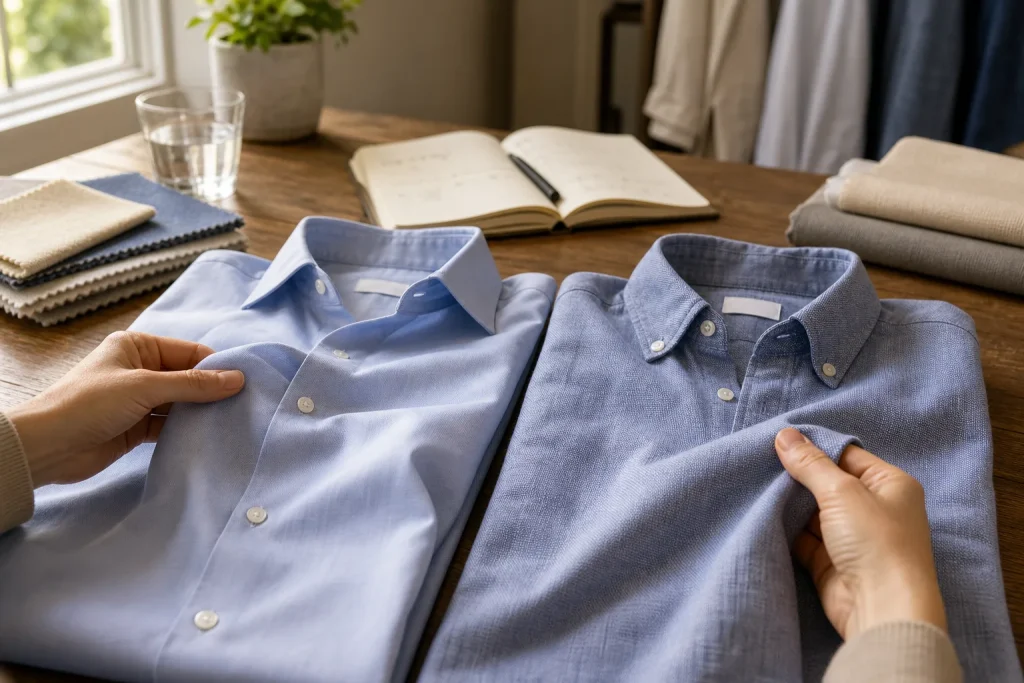
One cotton shirt feels crisp against your wrist; another, also labelled cotton, slumps softly over your hand. The label is not being misleading. It tells you what the fibre is, but not how that fibre was spun, built into cloth or finished. Those choices are what your fingers notice.
What does the label leave out?
A fibre name is only the starting point. Cotton can become a smooth poplin shirt, a textured Oxford or a soft jersey tee. The same is true of linen: a tightly woven linen shirt may feel firm, while a looser cloth can seem airy and relaxed.
When shopping, look beyond the fibre line. Hold the fabric up, pinch a small fold and let it fall. Does it spring back, keep a crease or hang in a rounded drape? These quick checks tell you more about the cloth’s character than the fibre name alone.
How does the weave change the hand?
Weave describes how threads cross each other. In plain weave, each cross-over alternates, making a simple, stable surface. Cotton poplin often uses this structure; it can feel smooth and crisp, with a clean outline when worn.
Oxford cloth has a more visible, basket-like structure. Its surface often feels grainier and looks slightly more casual. Twill, recognisable by diagonal lines, tends to feel supple and can fall in softer folds. The exact result still depends on the yarn and cloth construction, so treat these as clues rather than fixed rules.
Knitted fabric is built from loops rather than crossed threads. A cotton jersey shirt commonly stretches more readily and follows the body, while a woven cotton shirt may hold its shape more firmly. If you want a shirt that layers neatly under a jacket, a stable weave may suit you; for easy movement, a knit may feel more comfortable.
Why does the yarn matter?
Before it becomes cloth, fibre is spun into yarn. A smooth, even yarn can give fabric a neat surface. A more irregular or loosely spun yarn may leave tiny bumps and a relaxed, textured feel. Linen yarn often shows more natural variation than a very smooth cotton yarn, though finishing can soften or sharpen either one.
Yarn thickness matters, too. Fine yarns can make a light, fluid cloth; thicker yarns often create a more substantial surface. But a fine yarn woven tightly may still feel crisp, so do not judge thickness by touch alone. Look at the fabric against the light: visible gaps can suggest an open construction, while a dense surface may block more light.
What does fabric weight tell you?
Weight is about how much cloth there is, but you do not need a number to compare shirts. Let a panel rest over your palm. A light fabric may flutter and gather into small folds; a heavier one may hang in broader folds and feel more present on the body.
Neither is automatically better. A light cotton voile can feel lovely in warm weather but may need an undershirt if it is sheer. A heavier cotton twill can feel reassuringly substantial, yet make a shirt less airy. Think about where and when you will wear it, then choose the balance of coverage, movement and structure that suits the job.
Can finishing make the same cloth feel different?
Finishing is what happens to fabric after it is made. Brushing can raise a soft surface, as on some flannel shirts. Pressing or calendaring can leave cloth feeling smoother and looking flatter. A garment may also be washed or treated to give it a softer, more lived-in hand before it reaches the shop.
These effects can change how a shirt feels straight away, but they do not erase the underlying weave or yarn. If a surface feels unusually slick or stiff, check the care label and handle the garment gently until you know how it behaves after washing. Avoid assuming that a soft finish means the fabric itself is delicate—or that a crisp finish will stay crisp forever.
How can you compare two shirts in a shop?
Say you are choosing between two cotton shirts for an office where you want a tidy look without a stiff feel. Imagine the first is smooth poplin that holds a sharp fold; the second is softer twill that settles into rounded folds. If you prefer a clean, structured outline, the poplin may suit you. If you want a little more ease and a softer drape, the twill may be the better choice. That is a decision based on the fabric in front of you, not a claim that one construction is universally superior.
- Pinch and release: notice whether the cloth springs back or keeps a crease.
- Check the surface: look for a smooth, grainy, brushed or slubbed texture.
- Hold it to the light: compare how open or dense the fabric appears.
- Let it drape: see whether it falls in crisp lines or soft folds.
- Move the fabric gently: notice stretch and recovery, especially in knitted shirts.
- Read the care label: consider whether the washing and ironing routine suits you.
Finally, use the fibre label as a starting clue, then trust the cloth itself. A shirt’s hand comes from the combined choices of weave, yarn, weight and finish. Once you learn to notice those details, the word “cotton” or “linen” becomes useful context—not a promise that every shirt will feel alike.